
TRAPPC9
In December 2009 we published one of our most significant discoveries, the identification of TRAPPC9 (a.k.a. NIBP) as a new gene for non-syndromic autosomal recessive intellectual disability. The study, as part of our investigation of intellectual disability families from Pakistan, had mapped a single 3.2Mb locus on 8q24.3 in a large family from Abbotabad (recruited by Dr Asif Mir). Subsequent Sanger sequencing identified a homozygous nonsense mutation in exon 7 of TRAPPC9. We had reported the finding at the American Society of Human Genetics annual meeting (Honolulu, October 2009), and then published in the December issue of American Journal of Human Genetics, together with the Max Planck Institute (Berlin) group, who also identified a homozygous frameshifting mutation in an Iranian ID family.
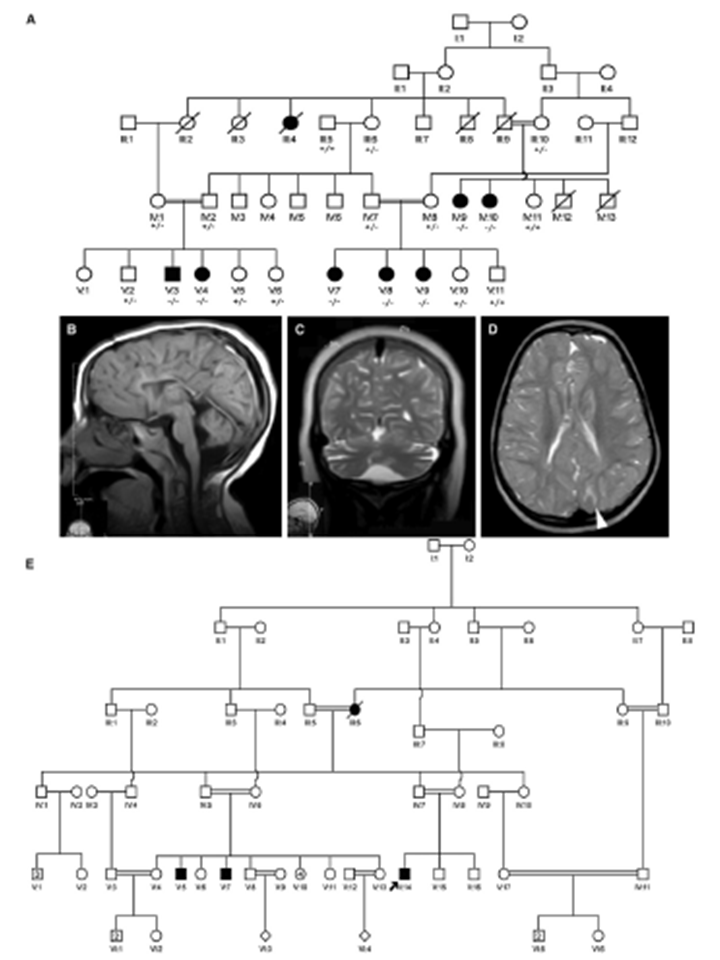
This gene, now referred to as MRT13 (MIM 613192; http://omim.org/entry/613192), is one of the most frequently reported for mutations associated with NS-ARID: Mochida et al, 2009 (http://www.ncbi.nlm.nih.gov/pmc/articles/PMC2790576/); Philippe et al, 2009 (http://www.ncbi.nlm.nih.gov/pmc/articles/PMC2795800/); Abou Jamra et al, 2011 (http://www.ncbi.nlm.nih.gov/pmc/articles/PMC3198153/); Kakar et al, 2012 (PMID 22989526); Koifman et al, 2010 (PMID 20425834); Marangi et al, 2013 (http://www.ncbi.nlm.nih.gov/pmc/articles/PMC3548258/). In the last of this list, a homozygous splice-site mutation was identified in a non-consanguineous Italian family. We have also recently identified an autism family from Thailand segregating compound heterozygous mutations- the first to be identified for TRAPPC9.